Content marketing for SEO is the practice of creating and publishing genuinely useful content that attracts visitors from search engines, builds a website’s authority, and guides those visitors toward becoming customers. For businesses across the United States, content is the substance that search engines actually rank and the reason other websites choose to link to you. Without content, there is nothing for SEO to work with; with the right content, a website becomes a magnet that draws in the exact people it wants to reach. This guide explains how content marketing and SEO work together, and how to build a content strategy that produces lasting results. This guide was prepared by the team at SEO.
The relationship between content marketing and SEO is best understood as a partnership in which each makes the other effective. Content marketing without SEO produces material that may be excellent but is never found. SEO without content marketing has nothing of value to rank or to offer. Together, they form one of the most durable and cost-effective growth engines a business can build — one that keeps attracting customers long after the work is done.
What Content Marketing for SEO Means
Content marketing for SEO is the deliberate creation of content designed both to satisfy the people who read it and to be discoverable by the search engines that send those people. It is not content created in a vacuum and hoped to be found, nor is it content created purely to please an algorithm. It sits precisely where genuine usefulness and search visibility meet.
This dual purpose defines everything about the discipline. Every piece of content is created with a real audience need in mind and with an understanding of how search engines will discover, interpret, and rank it. When content marketing and SEO are practiced as one integrated effort rather than two separate activities, the content created serves readers genuinely and earns visibility at the same time.
Why Content Is Central to SEO
Content is central to SEO because content is what search engines rank. A search engine’s entire purpose is to find the best content to answer a query, and a website with no substantial content simply gives it nothing to consider. Beyond that basic fact, content is also what earns the links and authority that drive rankings, because other sites link to content they find valuable.
Content additionally shapes how visitors experience a site and whether they trust the business behind it. Useful, well-made content keeps people engaged, answers their questions, and builds the credibility that turns a visitor into a customer. In every dimension of SEO — ranking, authority, user experience, conversion — content is doing essential work. This is why content marketing is not one tactic among many but a core pillar of search optimization.
The Shift From Keywords to Genuine Value
Content marketing for SEO has undergone a fundamental shift. In an earlier era, content was often created to manipulate search engines — thin pages built around repeated keywords, produced in volume with little regard for the reader. That approach is now obsolete and actively penalized, because search engines have become far better at recognizing genuine quality.
Today, content marketing for SEO succeeds by genuinely serving the reader. Search engines increasingly reward content that is thorough, accurate, clear, and genuinely helpful, because that is the content their users actually want. This shift is good news for honest businesses: the work of content marketing for SEO has become the same as the work of genuinely helping your audience. You are no longer gaming a system; you are being rewarded for creating something good.
Understanding Your Audience First
Effective content marketing for SEO begins not with content but with a deep understanding of the audience. Who are the people you want to reach? What problems do they have? What questions do they ask? What language do they use to describe their needs? Content created without these answers tends to miss, however well-written it is.
This understanding comes from genuine attention to the audience — the questions customers actually ask, the concerns they raise, the words they use. It is reinforced by keyword research, which reveals the real searches an audience performs. When content marketing is grounded in a true understanding of the audience, every piece created has a genuine reader waiting for it. That grounding is what separates content that resonates from content that is merely produced.
Aligning Content With Search Intent
Every piece of content in an SEO-focused strategy should be aligned with a specific search intent — the underlying reason someone performs a search. Some searchers want to learn, some want to compare options, some are ready to act. Content that matches the intent behind its target search satisfies the reader and ranks well; content that ignores intent fails on both counts.
Aligning content with intent means deciding, for each piece, exactly who it serves and what they are trying to accomplish. An informational guide serves a learner; a comparison serves someone weighing options; a focused page serves someone ready to act. When content is built around a clear intent, search engines understand precisely when to show it, and readers find exactly what they were looking for. This alignment is one of the most important disciplines in content marketing for SEO.
Topic Clusters and Content Architecture
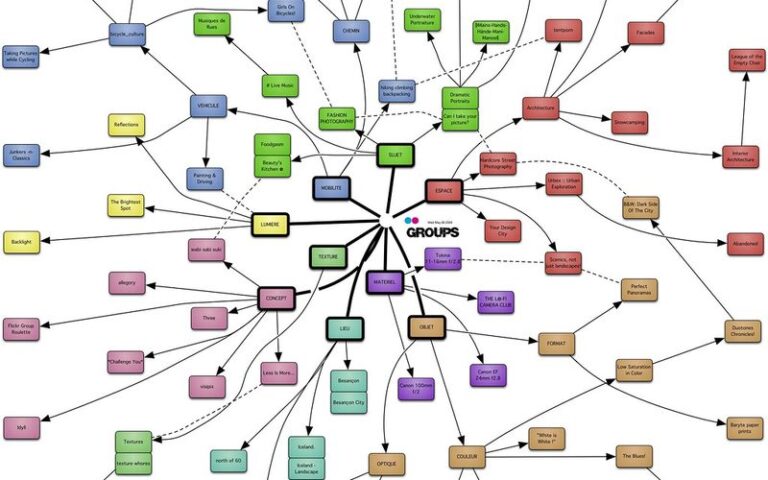
Modern content marketing for SEO organizes content into topic clusters rather than treating each piece as an isolated post. A topic cluster consists of a substantial pillar piece covering a broad subject thoroughly, surrounded by focused articles that each explore a specific sub-topic or question in depth, all interlinked.
This architecture matters because search engines reward demonstrated depth and expertise on a subject. A site that covers a topic comprehensively, from every relevant angle, signals genuine authority in a way that scattered, unconnected articles never can. Topic clusters also help readers, who can move easily between the overview and the detail. Building content as a deliberate architecture of clusters, rather than an accumulating pile of posts, is what turns content marketing into a strategy for owning entire subject areas.
Quality Over Quantity in Content
One of the most important principles in content marketing for SEO is that quality decisively outweighs quantity. It is tempting to measure content by volume — how many articles published, how many words produced — but search engines and readers both reward substance, not output. A small number of genuinely excellent, thorough pieces will outperform a large number of thin, ordinary ones.
This principle has practical consequences. It means investing the time to make each piece of content genuinely complete and useful rather than spreading effort thin across many shallow pieces. It means being willing to publish less in order to publish better. A business that embraces quality over quantity creates content that ranks, earns links, builds trust, and continues to perform for years — a far better return than a high volume of content that does none of those things.
Creating Comprehensive, In-Depth Content
Search engines and readers both favor content that thoroughly answers the question it addresses, leaving the reader genuinely satisfied. Comprehensive content does not mean padded or unnecessarily long; it means complete — covering the topic in enough depth that the reader does not need to look elsewhere to understand it.
Creating this kind of content requires genuine effort and genuine knowledge. It means anticipating the questions a reader will have and answering them, addressing the topic from the angles that matter, and providing real substance rather than surface-level generalities. Content that is comprehensive in this sense becomes the definitive resource on its subject, the page that earns the ranking, the links, and the reader’s trust. Depth, done honestly, is one of the most reliable advantages in content marketing for SEO.
Writing for People and Search Engines Together
A persistent misconception is that writing for people and writing for search engines are competing goals. In modern SEO, they are very nearly the same goal. Search engines aim to reward the content that best serves their users, so content that genuinely serves readers is content that is positioned to rank.
The practical approach is to write first and foremost for the human reader — clearly, helpfully, in language they understand — while keeping in mind the structural elements that help search engines understand the content. Clear headings, logical organization, and a focus on a defined topic serve both the reader and the search engine at once. When content marketing for SEO is done well, there is no tension: serving the reader well is the strategy.
Content Formats That Work for SEO
Content marketing for SEO uses a range of formats, each suited to different needs and different stages of the audience’s journey. In-depth guides serve readers who want to understand a subject thoroughly. Articles answering specific questions capture people searching for those exact answers. Comparisons help readers weighing options. How-to content serves people trying to accomplish something.
The right mix of formats depends on the audience and the business, but the underlying principle is constant: each format should be chosen because it genuinely serves a reader need, not because it is fashionable. A thoughtful content strategy uses different formats deliberately, matching each to a real intent and a real stage of the customer journey, so that the content as a whole meets the audience wherever they are.
Content for Every Stage of the Customer Journey
A complete content marketing strategy creates content for every stage of the customer journey, not only the final one. Early in their journey, people search broadly as they explore a problem; in the middle, they compare options; near the end, they look for the specific thing they are ready to act on.
A strategy that creates only content aimed at people ready to buy misses the chance to reach and influence customers earlier, when they are forming their understanding and their preferences. Content marketing for SEO that spans the whole journey meets potential customers when they first have a question, earns their trust through genuinely helpful content, and guides them gradually toward a decision. This journey-spanning approach turns content into a path that leads readers steadily toward becoming customers.
On-Page Optimization of Content
Once content is created, on-page optimization ensures search engines can understand it and readers are well served. This includes a clear and descriptive title, a compelling description, logical heading structure, and the natural inclusion of the terms and topics the content addresses. It also includes internal links connecting the content to related pages.
On-page optimization is not about manipulating the content with forced keywords; it is about presenting genuinely good content in a way that is clear to both readers and search engines. Well-structured content with a clear focus and sensible organization is easier for a search engine to interpret and easier for a reader to follow. Optimization, properly understood, is simply the finishing craft applied to content that already has genuine substance.
How Content Earns Links and Authority
One of the most valuable functions of content in an SEO strategy is its ability to earn links. Other websites link to content they find genuinely valuable — comprehensive guides, original research, useful resources, distinctive insights. Content that is merely ordinary gives no one a reason to link, while content that is genuinely the best resource on its topic earns links naturally over time.
This means content marketing and link building are deeply connected. The foundation of earning authority is having content worth linking to. A business that invests in creating genuinely link-worthy content finds that authority follows, because the content itself does the persuading. Content created with this in mind — content designed to be the resource others reference — becomes an engine of authority as well as a source of direct traffic.
Updating and Maintaining Existing Content
Content marketing for SEO is not only about creating new content; it is also about maintaining what already exists. Over time, content can become outdated, lose accuracy, or fall behind newer and better resources from competitors. Content that once ranked well can quietly decline if it is left untended.
Maintaining content means revisiting existing pieces, updating them with current information, improving them where they fall short, and ensuring they remain the best available answer to their topic. This maintenance is often more efficient than creating new content, because it builds on pages that already have some authority and history. A mature content marketing strategy devotes real attention to keeping its existing content strong, not only to producing more.
Content Consistency and Publishing Rhythm
Content marketing for SEO rewards consistency. A steady, sustainable rhythm of creating and improving content signals an active, living website and steadily expands the range of searches a site can rank for. Sporadic bursts of activity followed by long silences produce far weaker results than consistent, ongoing effort.
Consistency does not mean publishing at the highest possible volume; it means a sustainable pace that can be maintained over the long term without sacrificing quality. A business that publishes excellent content steadily, month after month, builds a compounding asset. The rhythm matters more than the burst, because SEO rewards sustained, accumulating effort rather than occasional intensity.
Measuring Content Marketing Results
Content marketing for SEO should be measured against meaningful outcomes. Early signals include content being indexed, beginning to rank, and attracting initial traffic. As the strategy matures, the central measure is organic traffic — the visitors content brings from search.
But traffic is not the final goal. The real measure is whether content contributes to business results: whether it attracts the right audience, builds trust, and guides readers toward becoming customers. The strongest content strategies track not just how much traffic content earns but whether that traffic converts. Measuring content this way keeps the focus on genuine business value rather than on vanity metrics that look impressive but mean little.
Common Content Marketing Mistakes
Several mistakes undermine content marketing for SEO. The most common is prioritizing quantity over quality — producing many thin pieces instead of fewer excellent ones. Another is creating content without understanding the audience or aligning with search intent, so the content has no genuine reader waiting for it.
Other frequent mistakes include treating content as isolated posts rather than building deliberate topic clusters, neglecting to maintain and update existing content, publishing sporadically rather than consistently, and writing for search engines rather than for people. Each of these errors is avoidable, and avoiding them is much of what separates content marketing that produces lasting results from content marketing that produces disappointment.
Content Marketing as Search Evolves
As search evolves and AI-driven results become more prominent, content marketing for SEO remains essential, and its core principles hold firm. AI systems, like traditional search, draw on content that is clear, comprehensive, accurate, and genuinely authoritative. The content that earns traditional rankings is the same content these systems are likely to reference.
This continuity is reassuring. A business that invests in genuinely excellent content — content that thoroughly and honestly serves its audience — is building an asset that performs across whatever forms search takes. Rather than chasing every change, the durable strategy is to keep creating content that is the best, clearest, most trustworthy answer to the questions an audience asks. Content marketing for SEO evolves in its presentation but not in its foundation.
Doing Content Marketing Yourself Versus Professional Help
A business can do meaningful content marketing itself, particularly because the business holds genuine expertise that good content requires. An owner or team that truly knows the subject and the customers can create content with real depth and authenticity that is difficult to replicate.
At the same time, content marketing for SEO benefits from expertise in strategy, keyword research, content architecture, and optimization. Many businesses combine the two: the business contributes genuine subject expertise and knowledge of its customers, while a specialist provides the strategic framework, the research, and the optimization craft. However the work is divided, the goal is the same — content that is genuinely valuable, properly aligned with what an audience searches, and built into a coherent strategy.
Building a Lasting Content Strategy
Content marketing for SEO delivers its greatest value when treated as a long-term, ongoing discipline rather than a short campaign. Content compounds: each well-made, well-optimized piece continues to attract visitors and build authority long after it is published, and the body of content grows steadily stronger over time.
Building a lasting content strategy means committing to a sustainable rhythm of creating excellent content, organizing it into deliberate clusters, maintaining what already exists, and measuring against genuine business outcomes. Approached this way, content marketing becomes one of the most reliable and cost-effective growth channels a business can own — a channel that keeps attracting the right customers, year after year, because it is built on the enduring foundation of genuine usefulness.
Frequently Asked Questions
What is content marketing for SEO?
Content marketing for SEO is the creation of genuinely useful content designed both to satisfy readers and to be discoverable by search engines. It sits where real usefulness and search visibility meet, building traffic, authority, and trust together.
Why is content so important for SEO?
Content is what search engines rank, what earns links and authority, and what shapes whether visitors trust a business. In every dimension of SEO — ranking, authority, user experience, conversion — content is doing essential work, which makes it a core pillar.
Is it better to publish more content or better content?
Better content. Quality decisively outweighs quantity. A small number of genuinely excellent, comprehensive pieces will outperform a large volume of thin, ordinary ones, and will keep performing for years.
What are topic clusters?
A topic cluster is a substantial pillar piece covering a broad subject, surrounded by focused articles exploring specific sub-topics, all interlinked. This architecture signals genuine depth and expertise to search engines and helps a site rank across entire subject areas.
How long does content marketing take to produce SEO results?
Like all SEO, it builds over months rather than producing instant results. Content compounds — each piece continues attracting visitors and building authority over time — so consistency and patience are essential to the strategy.
Should content be written for readers or search engines?
For readers, first and foremost. In modern SEO the two goals are nearly identical, because search engines reward content that genuinely serves users. Clear structure helps search engines understand it, but genuine usefulness to the reader is the strategy.
Read More
This article is hosted on emagazine.gr. For complete support with your organic growth, see SEO and the guides below:
- Ο Καλύτερος SEO Consultant Στην Αθήνα: Πώς Να Επιλέξετε Τον Σωστό Συνεργάτη Σήμερα
- Οι Καλύτερες Υπηρεσίες SEO Στην Ελλάδα Σήμερα: Πώς Να Επιλέξετε Τη Σωστή Λύση Για Περισσότερη Ορατότητα Και Πελάτες
- SEO Plan Για Μικρές Επιχειρήσεις: Ο Πρακτικός Οδηγός Για Περισσότερη Ορατότητα Και Πελάτες Σήμερα
- Off-Page SEO Specialist: Ο Απόλυτος Οδηγός Ανάπτυξης Για Ελληνικές Επιχειρήσεις Σήμερα
- Pmar SEO: Ο Απόλυτος Οδηγός Για Εγγυημένη Πρώτη Σελίδα Στη Google Σήμερα
About the Author