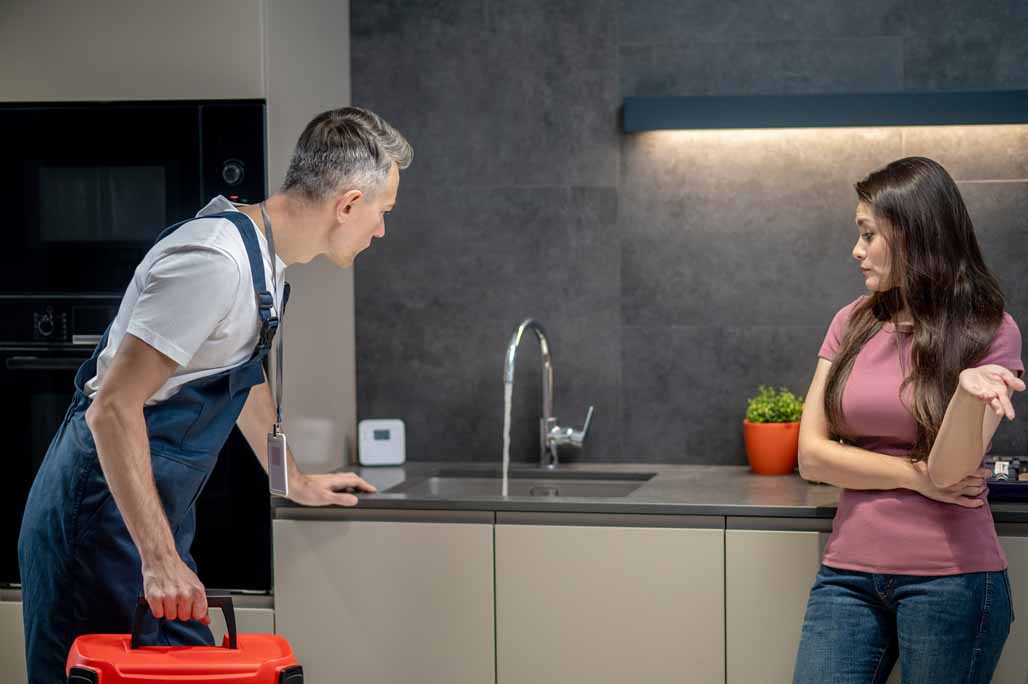
If you’re a plumbing business owner, you already know the frustrating part about marketing: the phone doesn’t ring on your schedule. It rings when someone’s water heater quits at 9:40 p.m., when a tenant texts “toilet overflow” in all caps, or when a property manager needs a vendor right now.
Today, that urgency is exactly why SEO for plumbers is still one of the highest-ROI channels in local marketing, when it’s done correctly. The people searching “emergency plumber near me” aren’t browsing: they’re trying to solve a problem in the next 30 minutes. And Google knows it. That’s why local results have become less about who has the prettiest website and more about who looks most trustworthy, closest, and most ready to help.
At Divramis, our plumbing SEO company team has spent over a decade helping roofing companies, contractors, and local home-service businesses climb Google’s rankings with white-hat strategies, transparent reporting, and measurable lead growth.
But here’s the reality we see across competitive niches (plumbing, roofing, hosting, iGaming, you name it): most “SEO” advice is either too generic (“write blog posts.”) or too risky (spam links, fake reviews, keyword stuffing). It might work for a month… then your rankings slide, your Map Pack visibility disappears, or your Google Business Profile gets suspended. Not fun.
This playbook is the opposite. We’ll walk through what Google rewards for local service businesses today, what to fix first, and what to measure so you know the work is paying off. We’ll cover Google Business Profile (GBP) setup, NAP consistency, local keyword research, service page structure that converts into calls, technical SEO essentials like schema and indexing, and a review system that doesn’t feel awkward.
We’ll also keep it practical. If you run a plumbing company serving one city, or ten, this is the kind of step-by-step approach we use when building white-hat growth plans at Divramis: sustainable, measurable, and built to win in competitive markets without gambling your business on shortcuts.
Let’s get into it.
How People Find Plumbers Online (And What Google Rewards)
Today, most plumbing leads from Google come from two “surfaces”:
- The Map Pack (Local Pack): the 3 business listings that show under the map.
- Organic results: regular website listings (often below the map).
If we’re being honest, the Map Pack is the money spot for many plumbers. It grabs attention first, it’s built for mobile, and it’s stuffed with “call” buttons.
So what does Google reward when deciding who shows up?
The 3 local ranking pillars (still true, just stricter)
Google’s local algorithm still revolves around:
- Relevance: Are we a match for what the searcher wants? (Services, categories, content, reviews that mention the job.)
- Distance: How close are we to the searcher or the city/area in the query?
- Prominence: Are we well-known and trusted? (Reviews, links, citations, brand mentions, engagement, real-world signals.)
What’s changed is how confidently Google can evaluate those pillars. It has more data and more ways to cross-check you.
How customers actually choose (and why “ranking #1” isn’t the whole game)
Plumbing searches are high-intent, but the chooser’s mindset varies:
- Emergency: fastest credible option wins. Reviews + availability signals matter.
- Price-sensitive: comparison mode. People scan service pages, financing, coupons, and “what it costs” content.
- Trust-first: homeowners burned by bad contractors. They look for credentials, guarantees, clear policies, and consistent branding.
So yes, we want rankings. But we also want conversion signals: clicks to call, direction requests, form fills, and time on page, because those behaviors often correlate with long-term local performance.
What Google is quietly measuring
We can’t see Google’s full scorecard, but in competitive local SERPs, we repeatedly see winners with:
- Complete, active Google Business Profiles (fresh photos, posts, services).
- Strong review velocity (not just quantity).
- Clear, city-relevant service pages (not thin “we do plumbing” pages).
- Fast mobile experience.
- Real local authority: neighborhood links, chamber of commerce, supplier mentions.
If we align our plumbing SEO around these realities, we don’t just “rank”, we become the obvious choice.
Set Up The Foundations: GBP, NAP Consistency, And Core Service Pages
Before we chase more keywords or publish content, we lock the foundation. For plumbers, that foundation is: Google Business Profile + consistent business info + pages that match your services.
Google Business Profile (GBP): the plumbing lead engine
Here’s what we treat as non-negotiable:
- Primary category: usually “Plumber.” Don’t get cute here.
- Secondary categories: add what you truly offer (e.g., “Drainage service,” “Water heater installation service,” “Gasfitter” if applicable).
- Service areas: keep them realistic. If you list 40 suburbs you never reach, you’ll create bad engagement and potentially complaints.
- Services section: fill it out with your real offerings (hydro jetting, leak detection, water heater repair, etc.).
- Business description: write like a human. Mention key services + service areas + differentiators (24/7, licensed & insured, financing).
- Photos: not stock. Trucks, team, before/after, branded uniforms, the kinds of jobs you want more of.
- GBP posts: 1–2 per week is plenty if you’re consistent, promos, seasonal reminders, recent job highlights.
If you’re in a competitive city, your GBP isn’t a set-and-forget listing: it’s a living asset.
NAP consistency: boring, but it fixes weird ranking problems
NAP = Name, Address, Phone. In local SEO, inconsistencies create distrust.
We’ve seen plumbers lose Map Pack visibility because:
- One directory has “Suite 2” and another doesn’t.
- Tracking numbers are used inconsistently.
- The business name varies (“Smith Plumbing LLC” vs “Smith Plumbing”).
Our rule: pick one canonical format and use it everywhere, GBP, website footer, contact page, citations, invoices, Facebook, Yelp, Apple Maps.
Core service pages: the pages that deserve to rank
A plumber website that only has “Home / About / Contact” is basically asking Google to guess.
At minimum, we want dedicated pages for your best revenue services, such as:
Read more: Why every business website needs a professional SEO audit
- Emergency plumbing
- Drain cleaning
- Water heater repair/installation
- Leak detection
- Sewer line repair/replacement
- Toilet repair/install
- Faucet and fixture installation
Each page should target a service + your city/area naturally (not stuffed). And each should make it easy to call.
If you want a fast win: build or improve these core pages first. They do the heavy lifting for both organic results and the trust signals that support your Map Pack rankings.
Local Keyword Research For Plumbers: Services, Cities, And “Near Me” Intent
Local keyword research for plumbers isn’t about finding clever phrases, it’s about mapping real jobs to real searches in your service area.
Start with the “money services” list
We begin by listing every service you want more of, then clustering them by intent:
- Emergency intent: “emergency plumber,” “24 hour plumber,” “burst pipe repair.”
- Repair intent: “water heater repair,” “toilet keeps running,” “low water pressure.”
- Install/replace intent: “water heater installation,” “replace sewer line,” “install garbage disposal.”
- Maintenance intent: “drain cleaning,” “descale tankless water heater,” “annual plumbing inspection.”
These clusters help us decide which should be service pages vs blog posts.
Add local modifiers (without creating doorway pages)
Plumbing searches often combine service + location:
- “drain cleaning [city]“
- “water heater repair near me“
- “plumber [neighborhood]“
We want location relevance, but we also want to avoid thin “doorway pages” (a separate near-duplicate page for every suburb). Today, that strategy is more likely to underperform.
Instead:
- Build strong city pages only for major markets you truly serve.
- Use service area sections on key pages (neighborhoods, nearby towns).
- Use case studies and project galleries to naturally mention local places.
The “near me” myth (and what actually ranks)
You don’t need to put “near me” all over your site. Google interprets “near me” based on proximity and local relevance.
What helps more:
- Clear service areas on your website.
- Strong GBP signals.
- Reviews that mention the city/neighborhood (naturally, from customers).
Tools and a simple workflow
A practical workflow we use:
- Pull seed keywords from your services list.
- Use Google autosuggest + “People also ask” + competitor pages.
- Validate with a keyword tool (Ahrefs, Semrush, or even Google Keyword Planner for directional volume).
- Assign one primary keyword per page, plus a handful of close variants.
The goal isn’t a spreadsheet that feels impressive. The goal is a site structure that matches how people actually search for plumbers in your area.
On-Page SEO That Converts: Service Page Structure, Copy, And CTAs
A plumbing service page has two jobs:
- Rank (or support Map Pack visibility).
- Convert the click into a call or booking.
If it only does the first, you’ll pay for it in wasted traffic.
A service page structure that works in competitive markets
Here’s a high-performing structure we use for plumber SEO:
- H1: Service + city (natural): “Drain Cleaning in Austin, TX”
- Above-the-fold:
- 1-sentence value proposition
- Trust badges (licensed/insured, financing, warranties)
- Click-to-call button (mobile)
- Short availability line (“Same-day service available”)
- Problem → solution copy: show you understand the pain (“standing water,” “recurring clogs,” “slow drains”).
- Your process: a simple 3–5 step explanation (inspect, quote, fix, test, clean up).
- Pricing transparency (without boxing yourself in): ranges, service call fees, “what affects cost.”
- Social proof: 2–4 review snippets relevant to that service.
- FAQ: answer the obvious questions (time, guarantees, causes, DIY risks).
- Strong CTA: repeat the call-to-action every ~1.5 scrolls.
Copy that ranks without sounding like a robot
Google doesn’t reward keyword stuffing: it rewards clarity.
We aim for:
- Plain English (no “use,” no fluff).
- Specificity: brands you work with, common failure points, local conditions.
- Confidence without hype: “Here’s what we’ll check” beats “We’re the #1 best amazing.”
CTAs that actually get calls
For plumbers, the best CTAs are immediate and low-friction:
- “Call now for same-day service”
- “Get a quote in 10 minutes” (only if you can deliver)
- “Text us a photo” (great for mobile)
And we make the phone number sticky on mobile. It’s simple, but it moves revenue.
Read more: Why you should use WordPress for your business website
Don’t forget internal linking
Internal links are how we tell Google what matters:
- From your homepage to your top service pages.
- Between related services (“drain cleaning” → “hydro jetting”).
- From blog posts to the service pages that monetize that traffic.
On-page SEO for plumbers isn’t a checklist, it’s salesmanship plus structure. If we get both right, rankings turn into booked jobs.
Technical SEO Essentials For Plumber Websites: Speed, Mobile, Indexing, And Schema
Technical SEO sounds intimidating, but for plumber websites it’s mostly about removing friction, for Google and for customers.
Speed and Core Web Vitals (especially on mobile)
Most plumbing traffic is mobile. If your site takes forever, people bounce back to the Map Pack.
What we prioritize:
- Compress images (job photos are usually huge).
- Use modern formats (WebP).
- Minimize heavy sliders and bloated page builders.
- Choose solid hosting (cheap hosting shows up in performance).
A “perfect” score isn’t necessary, but a fast, stable experience is.
Mobile UX: build for the emergency call
Mobile SEO for plumbers is really UX:
- Large tap targets (call, request service).
- Sticky header with phone number.
- Short forms (name, phone, service, address).
- Clickable address to open maps.
If someone can’t call you in 2 seconds, we’re donating leads to competitors.
Indexing and crawl basics
We check:
- Google Search Console is installed and verified.
- XML sitemap is submitted.
- Important pages aren’t blocked by robots.txt or noindex.
- Canonicals are correct (especially if the site has parameter URLs).
Plumber sites sometimes accidentally noindex their service pages during a redesign. It happens more than you’d think.
Schema: easy wins for local trust
Schema isn’t magic, but it’s clean communication.
The big ones:
- LocalBusiness / PlumbingService schema (with NAP)
- Service schema on key service pages
- FAQ schema where appropriate (only for genuine FAQs)
- Review schema carefully (don’t fake it: follow guidelines)
Schema won’t automatically put you in the Map Pack, but it can improve how Google understands your business and your page intent.
Security and reliability
HTTPS is standard, but we also look for:
- No broken plugins/themes.
- Regular updates.
- Basic spam protection on forms.
A hacked plumber site is an SEO disaster and a reputation nightmare. Technical SEO is how we keep the foundation stable while everything else grows.
Reviews And Reputation SEO: A System To Earn More (And Better) Google Reviews
For SEO for plumbers, reviews aren’t optional. They influence conversion and they’re a major prominence signal for local rankings.
But the goal isn’t to “get more reviews.” It’s to build a system that produces:
- Steady review velocity
- Service-specific mentions (drain cleaning, water heater, etc.)
- Location mentions (city/neighborhood) naturally
- A healthy mix of recent reviews (freshness matters)
The best time to ask (and who should ask)
In plumbing, timing is everything.
We’ve found the best moment is right after:
Read more: YouTube video SEO optimisation tips for local businesses
- The problem is fixed
- The area is cleaned
- The customer visibly relaxes
And the best person to ask is usually the tech, then the office follows up with a link.
A simple, repeatable review flow
Here’s a system that works without feeling pushy:
- In-person prompt: “If you feel we earned it today, a quick Google review really helps a local business like ours.”
- Text message within 1 hour with the direct review link.
- Email follow-up the next morning if they didn’t leave one.
- If the job is high-value, a personal follow-up from the owner/manager.
Keep it polite, short, and human.
What about negative reviews?
We don’t panic. We respond fast and professionally:
- Acknowledge their frustration.
- State what you can verify.
- Offer a next step offline.
A strong response can actually increase trust for future customers reading the thread.
Reputation SEO beyond Google
Google reviews are the priority for the Map Pack, but we also build a broader footprint:
- Facebook (for community proof)
- Yelp (varies by market)
- Industry sites and local directories
The main rule: don’t spread yourself thin. Win Google first.
If you carry out a review system and stick to it for 90 days, it’s one of the fastest ways to improve both rankings and call volume, without touching your website.
Local Links And Citations: Building Authority Without Spam
Links still matter today, but the way we build them for local plumbers should be boring, in a good way.
Citations: get the big ones right
Citations are mentions of your NAP on other websites. They help Google confirm you’re real.
We start with:
- Data aggregators (varies by country)
- Apple Maps
- Bing Places
- Yelp
- Local chamber of commerce
- Trade associations
Then we clean duplicates and inconsistencies.
Local links that actually move the needle
For plumbers, the best links are often local relationships:
- Suppliers: ask to be listed as a recommended installer.
- Builders/remodelers: partner pages.
- Property managers: vendor lists.
- Community sponsorships: youth sports teams, charity events.
- Local newspapers/blogs: story angles (water conservation tips, winter pipe prevention).
These aren’t “SEO hacks.” They’re credibility signals that Google understands.
What to avoid
If someone offers “500 links for $99,” we run.
Avoid:
- Private blog networks (PBNs)
- Irrelevant guest posts on random sites
- Spam comments and forum profiles
- Exact-match anchor text abuse (“best emergency plumber in [city]” 50 times)
A plumber’s website doesn’t need hundreds of links. It needs the right handful, built steadily.
A realistic link-building pace
For many local service businesses, 2–6 quality links per month, plus consistent citations, can be enough to outrank bigger brands that are neglecting local trust.
Authority isn’t built in a weekend. But it is built predictably when we focus on real local relevance instead of shortcuts.
Content That Brings Leads: Emergency, Seasonal, And Problem-Solution Topics
Plumbers don’t need “content marketing” in the fluffy sense. We need content that captures demand before a customer picks a company, or content that answers a question well enough that they call us.
Read more: Conversion rate optimization tactics that actually move revenue
The best plumber content typically falls into three buckets:
- Emergency content: what to do right now (and when to call)
- Seasonal content: winter freezes, summer sewer smells, holiday garbage disposal overload
- Problem-solution content: the exact symptom the homeowner is Googling
And yes, this content supports SEO. But more importantly, it supports trust.
H3 Content Types That Work For Plumbers
Here are formats that consistently bring leads in local markets:
- “Cost” guides (done carefully): “Water heater replacement cost in [city] “
- Troubleshooting posts: “Why is my water pressure low?”
- Comparisons: “Tank vs tankless water heater: what’s best for a family of 4?”
- Preventive checklists: “How to winterize your plumbing (and what not to do)”
- Local case studies: “Sewer line replacement in [neighborhood]: timeline + what we found”
- FAQ hubs: one strong “Plumbing FAQs” page that links out to deeper answers
- Service-area spotlights (not doorway pages): genuine guides for major areas you serve, with local details and photos
A quick content rule we use: if the article can’t naturally suggest a next step (“If you’re seeing X, we can inspect it today”), it probably won’t generate calls.
How to connect content to revenue
Every content piece should:
- Link to the relevant service page
- Include a soft CTA (call, booking, or inspection)
- Mention your service area once or twice naturally
- Use real photos when possible (even one helps)
If you publish 2–4 genuinely helpful pieces per month for a quarter, you’ll usually see more long-tail rankings, and a noticeable bump in “informed” customers who call already trusting you.
Tracking What Matters: Calls, Form Fills, Rankings, And Map Pack Visibility
If we can’t measure it, we can’t improve it. And with plumber SEO, “more traffic” isn’t the KPI, booked jobs are.
Set up conversion tracking first
We typically track:
- Calls from GBP (call button clicks)
- Calls from website (tap-to-call)
- Form submissions (request service, estimate)
- Chat or SMS leads (if used)
This requires a clean analytics setup. Today that often means GA4 + Google Tag Manager + call tracking (done carefully so we don’t break NAP consistency).
Track Map Pack visibility the right way
Rank tracking for local is tricky because results change by location.
We use tools that can simulate grid-based rankings (how you rank across a map of your city). That shows where you’re strong and where you’re invisible.
This helps answer practical questions:
- Are we strong downtown but weak in the suburbs?
- Did reviews improve visibility in a specific area?
- Are we losing ground near a competitor’s office?
Don’t ignore Search Console
Google Search Console tells us:
- Which queries trigger impressions
- Which pages get clicks
- Indexing issues
- Core page experience problems
For plumbers, it often reveals valuable “symptom searches” you didn’t think to target (e.g., “gurgling toilet,” “sewer smell basement”). Those can become new content topics.
A simple monthly reporting dashboard
We like a one-page view:
- Leads: calls + forms (and booked jobs if tracked)
- Map Pack visibility (grid average + top keywords)
- Organic clicks to key service pages
- Review count + average rating + review velocity
If the numbers move, great. If they don’t, we know exactly which lever to pull next.
Common SEO Mistakes Plumbers Make (And How To Fix Them Fast)
Most plumbing SEO problems aren’t mysterious. They’re the same issues we see over and over, usually because a site was built like a brochure, not a lead engine.
Mistake #1: One generic “Services” page
Fix: create dedicated service pages for your top jobs and internally link to them from the homepage and navigation.
Mistake #2: Wrong GBP categories (or ignoring GBP entirely)
Fix: set “Plumber” as primary, add accurate secondary categories, and complete every GBP field you can.
Mistake #3: Inconsistent phone numbers (NAP issues)
Fix: standardize your NAP, clean citations, and if you use call tracking, do it with dynamic number insertion on-site while keeping your canonical number consistent.
Read more: Cuppa AI review — a top content creation tool for SEO
Mistake #4: Thin location pages / doorway pages
Fix: consolidate. Build one strong city page per real market. Add neighborhoods naturally in content, FAQs, and case studies.
Mistake #5: No review system
Fix: carry out a text-first review request flow and make it part of job closeout.
Mistake #6: Slow, cluttered mobile site
Fix: compress images, remove heavy elements, and prioritize callability (sticky call button, short forms).
Mistake #7: Blogging without a strategy
Fix: publish content that connects directly to services (cost, troubleshooting, comparisons) and link it to the money pages.
If we fix these seven, most plumbers see meaningful movement within a few months, especially in markets where competitors are coasting on old rankings.
Conclusion: Your 90-Day SEO Plan To Start Winning Local Searches
If we want to win at SEO for plumbers today, we don’t need a thousand tactics, we need 90 days of disciplined execution on the right few.
Here’s a practical plan we can run:
Days 1–30 (Foundation + quick wins)
- Fully optimize GBP: categories, services, photos, posts, service areas.
- Fix NAP consistency across the web.
- Build/upgrade core service pages (emergency, drains, water heaters, leaks, sewer).
- Set up tracking: GBP actions, calls, forms, Search Console.
Days 31–60 (Authority + conversion)
- Carry out a review request system and aim for steady weekly reviews.
- Improve on-page conversion: stronger CTAs, FAQs, trust elements, pricing guidance.
- Start citation cleanup + secure a few real local links.
Days 61–90 (Content + expansion)
- Publish 6–10 high-intent pieces (cost, troubleshooting, seasonal).
- Add internal links from content to service pages.
- Track Map Pack visibility across your service area and adjust.
If you want a partner to execute this with a white-hat, risk-free approach, that’s exactly what we do at Divramis: we build local SEO systems that grow traffic sustainably, sometimes dramatically, without betting your business on shortcuts.
The best time to start is before the next busy season. The second-best time is today.
Key Takeaways
- SEO for plumbers today centers on optimizing Google Business Profile with accurate categories, photos, and service details to boost local visibility.
- Consistent NAP (Name, Address, Phone) information across all directories prevents ranking drops and builds trust with Google.
- Creating dedicated, city-targeted service pages with clear calls-to-action drives both search rankings and customer conversions.
- Implementing a steady review system collecting service- and location-specific Google reviews strengthens local prominence and attracts emergency calls.
- Technical SEO essentials like fast mobile loading, proper indexing, and schema markup enhance user experience and search engine understanding.
- A focused 90-day SEO plan—foundation setup, authority building, and content expansion—can sustainably increase leads and map pack visibility for plumbing businesses.
Frequently Asked Questions about SEO for Plumbers
What makes SEO for plumbers a high-ROI marketing channel today?
SEO for plumbers is high-ROI because most local plumbing searches indicate urgent needs, like “emergency plumber near me,” so ranking well leads to quick calls and bookings from customers who need fast, trusted service.
How important is a Google Business Profile (GBP) for a plumbing business’s local SEO?
A complete and active GBP is critical for plumbers—it boosts visibility in the Map Pack, showcases services, photos, and reviews, and signals trust and proximity, which are key local ranking factors today.
Why should plumbers focus on NAP consistency across directories and citations?
NAP consistency (Name, Address, Phone) ensures Google trusts your business information. Inconsistencies confuse search engines and customers, often causing ranking drops or loss of Map Pack visibility for plumbers.
How can plumbers optimize their service pages for better SEO and conversion?
Plumbers should create dedicated service pages targeting specific services and locations with clear headings, trust badges, pricing info, FAQs, and multiple call-to-action buttons to convert clicks into calls and bookings effectively.
What types of content best generate leads for plumbing businesses?
Emergency advice, seasonal tips, and problem-solution content—like troubleshooting posts and cost guides—work best by addressing immediate needs and educating customers, supporting SEO and building trust that drives calls.
How can plumbers effectively collect more high-quality Google reviews without feeling pushy?
The best approach is to ask for reviews immediately after completing a job when the customer is satisfied, using friendly in-person prompts, followed by polite text or email reminders with direct review links to encourage steady, authentic feedback.
Read More
Discover more from E MAGAZINE:
- Pos I Klimatiki Allagi Klevi Tin Anasa Oi Epiptosis Ston Anthropino Organismo
- Pagkosmia Protathlitria I Ellada Stin Pachysarkia I Nea Genia Apilite
- Pandimia To Stres Gerase Proora Tous Egkefalous Efivon
- Tha Vgite Proto Rantevou Afta Ine 11 Pragmata Pou Tha Prepi Na Prosexis
- Mia Diaforetiki Ekthesi Gia Ton Aristoteli Onasi
About the Author